
Introduction
Without doubt autumn is one of the most beautiful times of the year when the leaves turn from green to glorious orange and gold, to red, purple and bronze. The quality of autumn colour is dependent upon soil type, soil pH, soil fertility, tree species, tree provenance and the weather.
Leaf Pigments
There are three pigments present in the leaves of trees and shrubs namely; a) anthocyanins, b) carotenoids and c) chlorophyll. It is the production and retention of these pigments that determines the colour of autumn leaves.
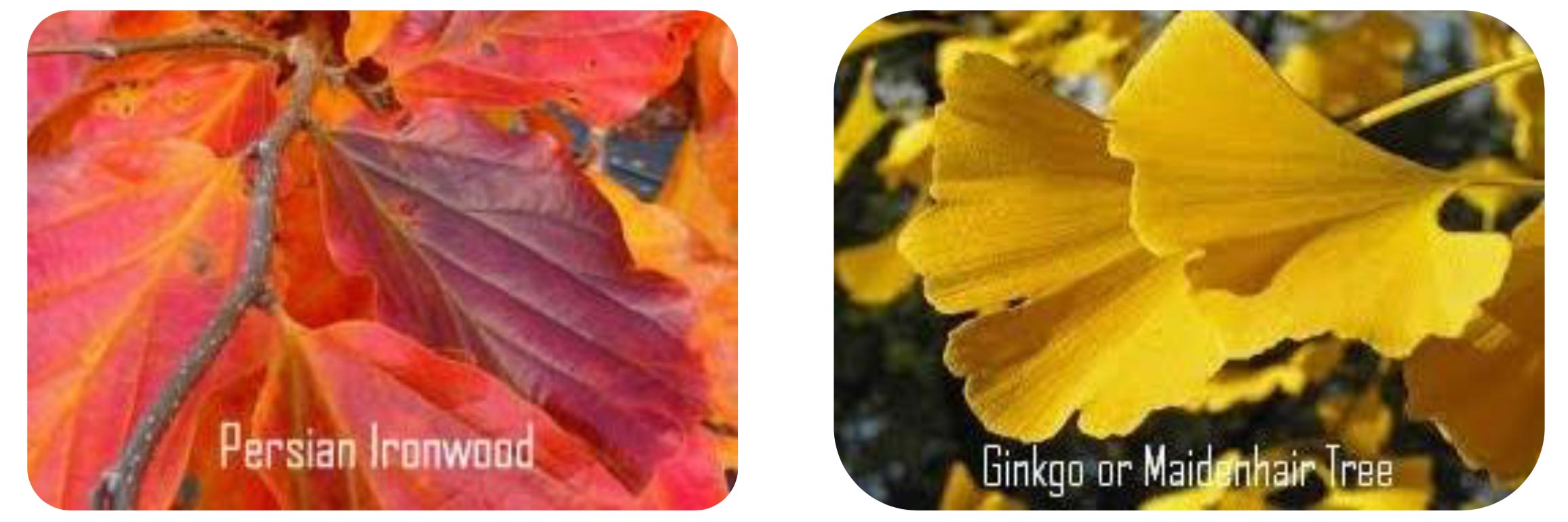
Leaf Change and Leaf Colour
Leaves change colour as the levels of pigments change in response to senescence, the process by which trees shed their leaves in autumn. Senescence is triggered by amount of available daylight.
All leaves gradually lose pigments during the growing season but the rate of loss accelerates during senescence. The rate of pigment loss is unequal this inequality creates the variation in autumn colour.
- anthocyanins produce the red, blue and purple colours,
- carotenoids produce the orange and yellow colours,
- chlorophyll produces the green colours, and
- anthocyanins and chlorophyll produce bronze
Soil Type and Soil pH
Trees growing on their preferred soil type and preferred soil pH typically thrive and hence produce better autumn colour.
Anthrocyanins are red on acid soils (pH < 7), purple on neutral soils (pH ~ 7) and maybe colourless in very alkaline soils, hence acid soils are associated with red autumn colour, neutral soils are associated with purple autumn colour and alkaline soils are associated with gold autumn colour.
Soil Fertility
Research undertaken by Emily M. Habinck indicates that trees growing on soils with relatively low nitrogen produce more anthocyanins, red, blue and purple colours, than trees growing on soils with good levels of nitrogen.
Provenance
Trees selected from areas recognised for good autumn colour continue to display good autumn colour when grown elsewhere.
Weather Conditions Influencing Autumn Colour
Mild wet summer months promote good tree health, good leaf retention and therefore contribute to good autumn colour.
Hot, dry summer months can cause physiological stress and the early onset of senescence which results is a poor autumn colour.
Cold, sunny autumn months, with high light intensity, enhance the production of anthocyanins (the red, blue and purple pigments).
Wet and windy weather can knock leaves off early therefore shorten the display of autumn colour.
Conclusion
The best autumn colour is achieved when trees of good provenance are growing on their preferred soil type, preferred soil pH and relatively poor soil fertility.
The ideal weather conditions for good autumn colour are mild wet summers followed by a cold dry autumn with high light intensity.