
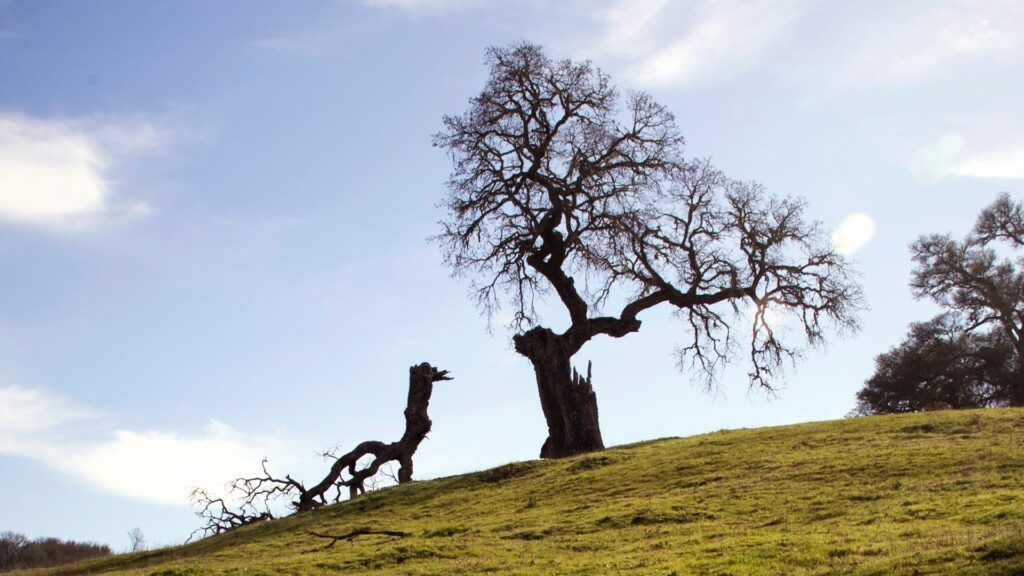
With autumn upon us, this is a question that many may be asking themselves over the coming months..
It’s a matter of survival of the fittest. Darwin’s concept of fitness is defined as reproductive success and is best understood as ‘survival of the form that will leave the most copies of itself in successive generations’.
The Axiom (a self-evident truth) of Uniform Stress
An optimal structure has a uniform stress over the whole of its surface. A tree is a self-optimizing mechanical structure in exactly the same way as a stag’s antler, a tiger’s claw and the bones in our body. A mechanical structure makes as economic use of available resources as possible whilst at the same time being as strong as it needs to be.
Self-Optimization
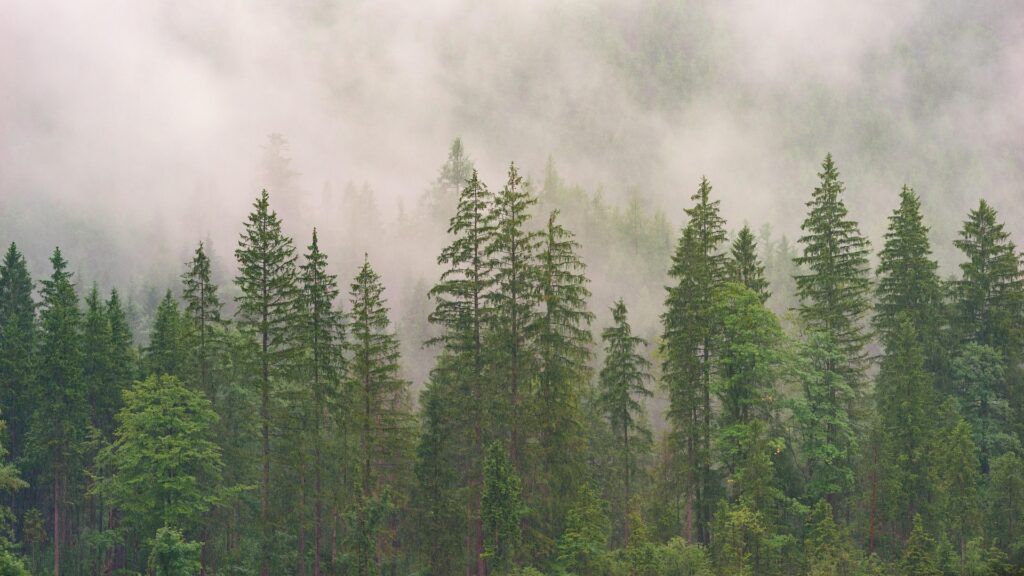
The most important aspect of a self-optimized tree is the upward taper of the stem which develops in response to wind loading. Very simply, the base of the tree is thicker than the top because that is where the stem is subject to the greatest bending moments. As the bending moment reduces, so the thickness of the stem reduces, hence trees taper from bottom to top. Additionally, the upward taper keeps the external loading as low as reasonably practicable.
So Why Do Trees Break Despite Their Optimal Form?
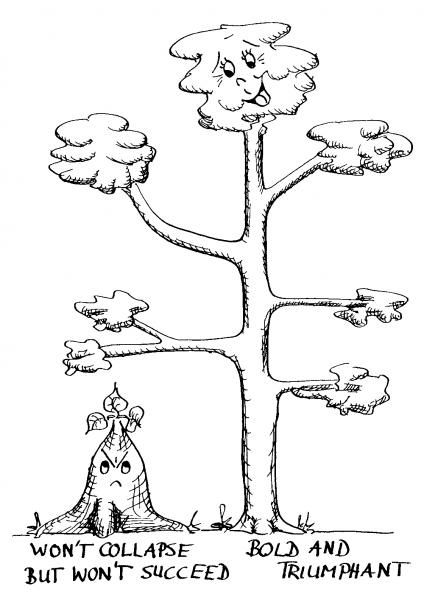
A tree that could withstand the fiercest hurricane might look something like the one the left, below, i.e., ‘won’t collapse but won’t succeed’.
If two such trees were really growing side-by-side, the stout fellow, with his short, thick stem, would quickly be deprived of sunlight by its taller slimmer neighbour. On balance, the ability to withstand an occasional storm is less advantageous than the ability to access direct sunlight.
In the long run, it clearly does not pay for trees to adopt the overcautious approach of insuring against any possible collapse or beakage; if it did, there would be only short, thick trees, even in dense woodland.
Even though trees usually tend to be slender and lightly built, there are big differences between various species. For example, oak sets more store in getting through a long life unscathed whereas poplars, whose rapid growth and less durable wood suggests something of a ‘throw-away mentality’.
Fitness can fundamentally be achieved by two different strategies: long life (stability) or fast reproduction (multiplication, replication). How much a trees species invests in one strategy, at the expense of the other one, depends on the environment; this is called r/K selection theory: in an r-situation, organisms will invest in quick reproduction (eg. birch, poplar and willow), in a K-situation they will invest in prolonged development and long life (eg. beech, oak and yew).
Summary
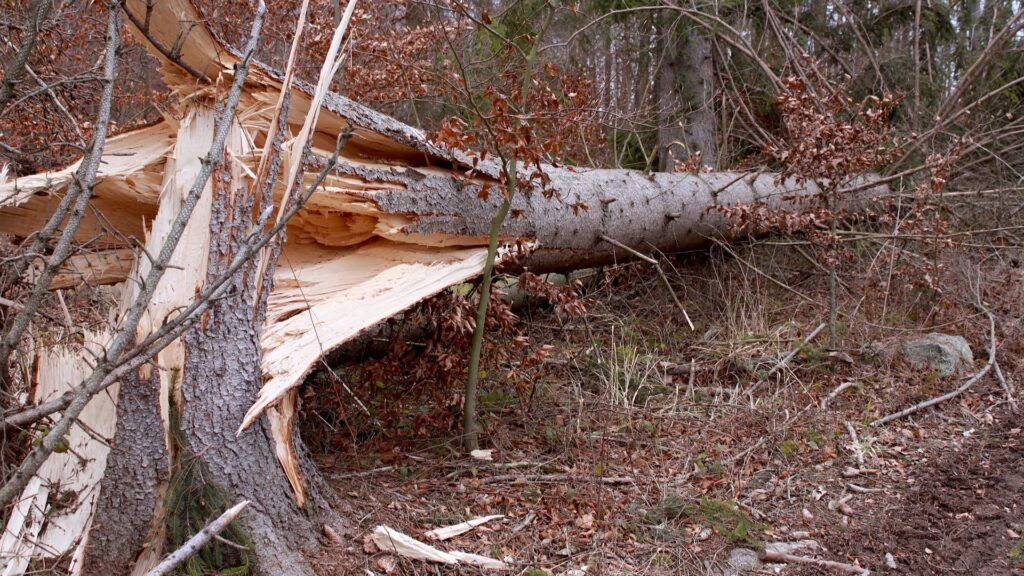
Although trees limit their breakage rate by fashioning the best lightweight design possible, they do break (typically in adverse weather conditions) because it is cheaper for the preservation of their species as a whole.
Reference: The Body Language of Trees – A handbook for failure analysis published by Department of the Environment, Transport and the Regions (DETR)