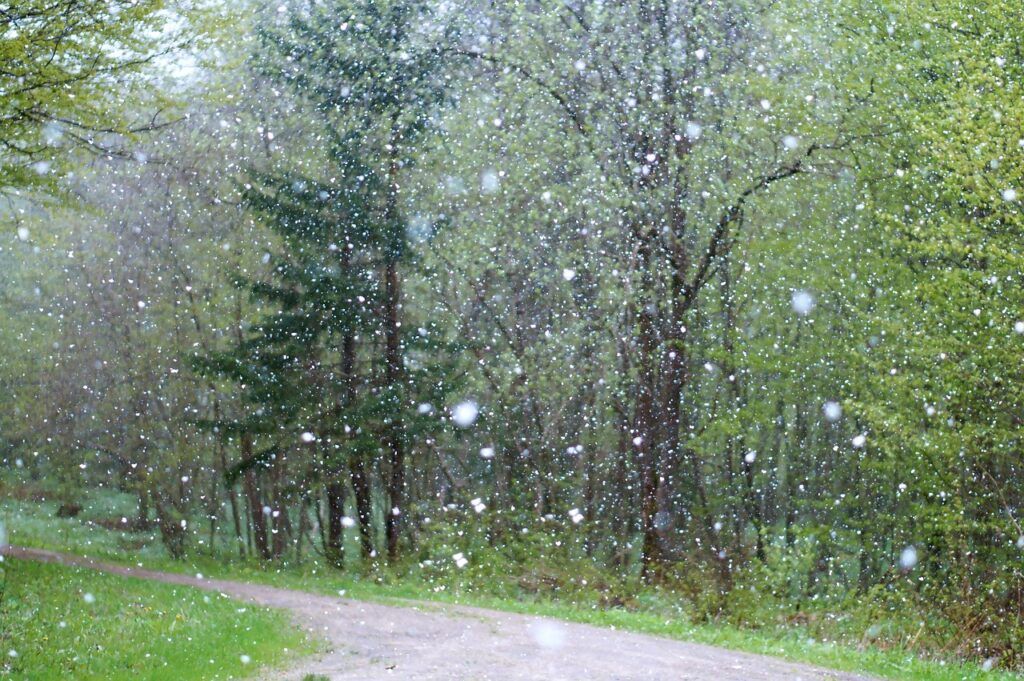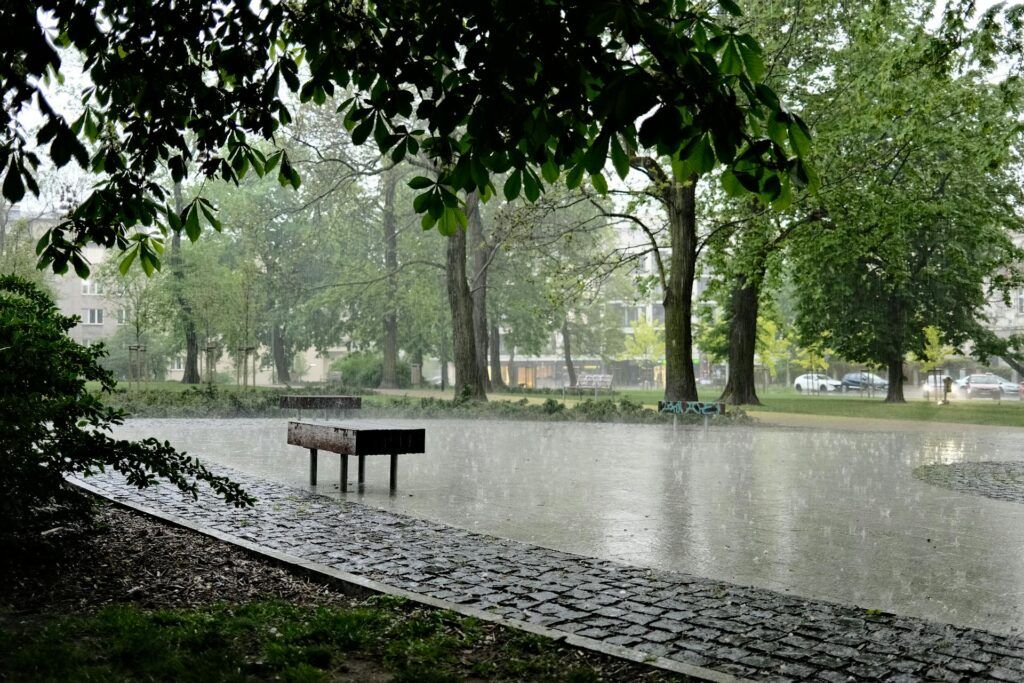
This March was the wettest in England since 1981 and the third wettest since records began in 1836. England received 119.2mm of rain, which is more than double its long-term average, but is all this rain a problem for trees?
There are two common causes or root decay in trees. The most common cause is waterlogged soils, typically as a result of poor drainage. The second cause of root decay is parasitic wood-decay fungi.
Very few trees, shrubs or other garden plants will survive prolonged waterlogging. Prolonged periods of sitting in soil saturated with water reduces the oxygen available to the roots and causes poor health and root decay which can lead to windblown trees and dead standing trees. But all is not lost; soil conditions can be improved using various techniques to promote drainage and reduce waterlogging.
Waterlogging occurs when water is unable to drain away. This leaves no air spaces in the saturated soil, and the tree roots literally drown. Waterlogging is common on naturally poorly drained soils, on heavy compacted soils and following a prolonged periods of heavy rain such as we have experienced this year.
Short-lived flash floods after a downpour are seldom a problem for most trees. It is prolonged, saturated soil that cause the most damage as the oxygen is used up by the tree roots and soil microorganisms.

Symptoms
Symptoms of waterlogging include:
- Yellowing of the leaves or decay between the veins, resulting in soft areas at the base or centre of the leaf. There may be dark areas along the midrib, and areas within the leaf go brown, especially on evergreen leaves
- The tree may also look like it is short of water, i.e. wilting
- A root sample will show blue-black roots, a typical sign of waterlogging that may be accompanied by a sour, rotting smell
- Shoots may die back due to a lack of moisture

Control
Short term
- Where did the excess water come from? Heavy rain, groundwater flooding or from overflowing drains? Contact your water company if you believe it has come from overflowing drains that are outside of your garden
- After flooding, wash down hard surfaces and collect up debris to prevent drains blocking, soil surfaces being covered, and pollutants or contaminants lingering in the garden
- Keep off the soil until it is workable, to avoid compacting it and worsening the conditions
- Apply organic matter to improve the soil structure or a balanced fertiliser in the spring, mulching over the root area after application
Long term
- Improve soil structure and drainage through cultivation
- Choose permeable surfaces when laying drives, paths and patios to allow rain to soak in
- If there is somewhere for water to go, drainage can be installed. Or, where appropriate, it may be worth digging out a ditch or seasonal pond at the lowest part of the garden to catch surplus water and let it soak in slowly
- Choose trees that are well suited to the soil condition
- Install some water butts. They will reduce the run-off into the drains but only if there is space for them to collect water.
- Consider creating a space for the water if it floods regularly, such as a rain garden or bioswale
Reference: https://www.rhs.org.uk/soil-composts-mulches/waterlogging-flooding