
On a hot summer’s day how much water does a tree use? How much water is available to use? How long can a tree survive without it raining?
How do Trees Use Water?
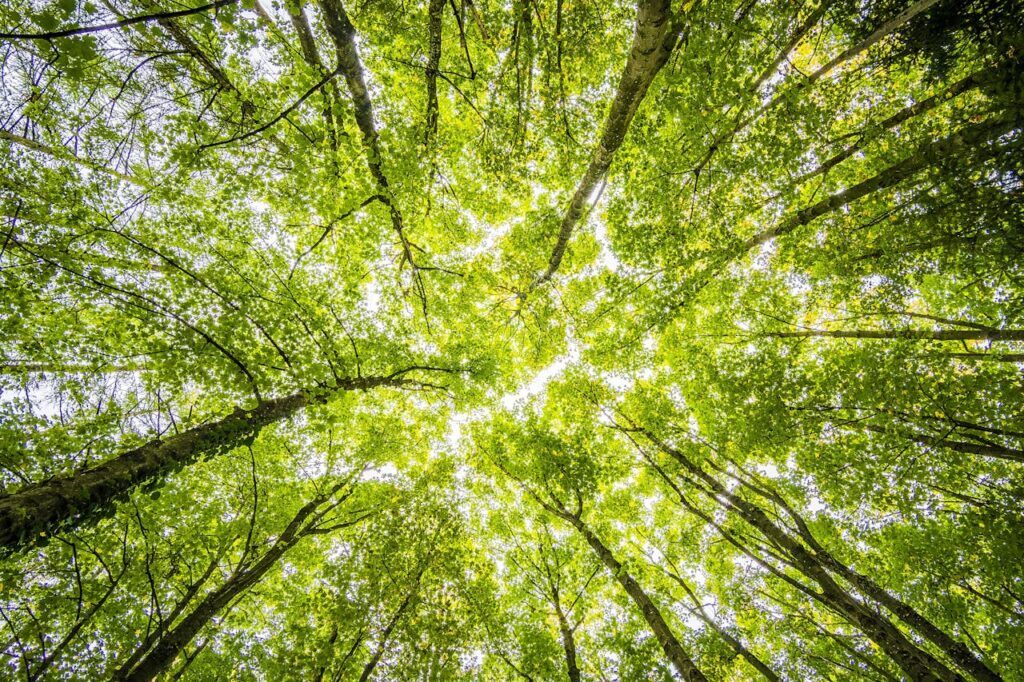
Trees use or lose water by two separate processes. Firstly, water is taken up by tree roots from the soil and evaporated through the pores or stomata on the surface of leaves. This is termed transpiration. Secondly by the interception of water by the surfaces of leaves, branches and trunks during rainfall, and its subsequent evaporation. Taken together, these two processes are often referred to as evapo-transpiration.
What is Soil?
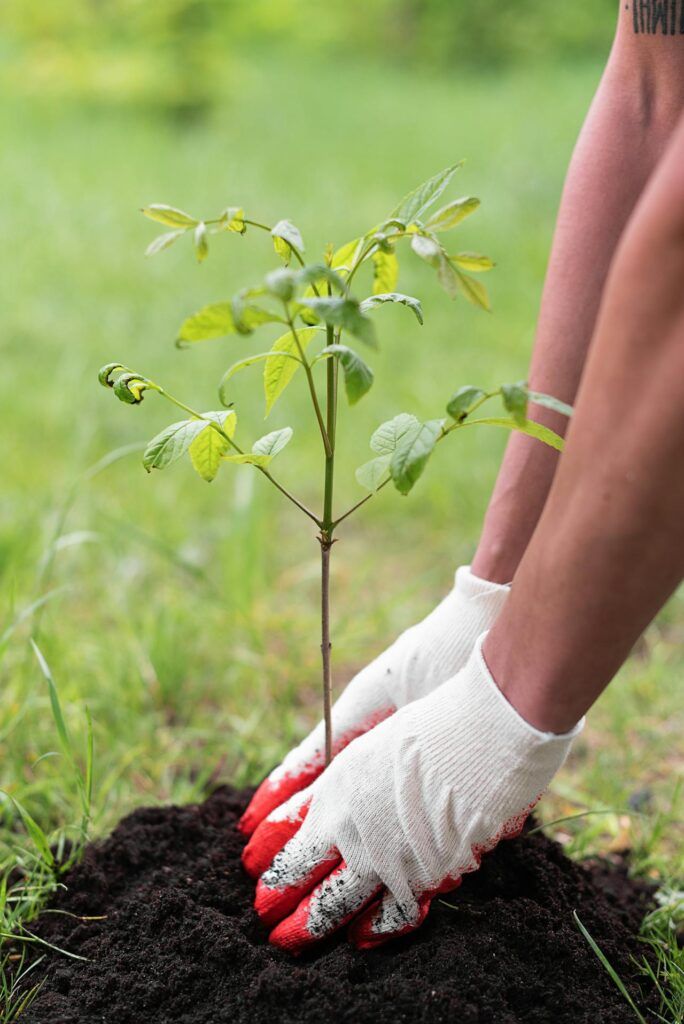
Soil is comprised of minerals, organic matter, air, water and multiple organisms. It covers the landscape and forms a thin layer of material over the superficial deposits and the bedrock geology. It is a medium for plant growth; a means of water storage, supply and purification; a modifier of the atmosphere and a habitat for organisms. From a geological point of view, most soils in the UK are less than 1.0m thick although they may be thicker where downslope accumulation has occurred.
What is Soil?
Soil is comprised of minerals, organic matter, air, water and multiple organisms. It covers the landscape and forms a thin layer of material over the superficial deposits and the bedrock geology. It is a medium for plant growth; a means of water storage, supply and purification; a modifier of the atmosphere and a habitat for organisms. From a geological point of view, most soils in the UK are less than 1m thick although they may be thicker where downslope accumulation has occurred.
What Factors affect Availability of Water in the Soil?
The amount of water available in the soil is determined by numerous factors, including;
- soil type – sandy soils have the least storage capacity, peat soils have the greatest storage capacity whilst clay, loam and silt based soils have a capacity somewhere in between.
- soil depth – thin soils have less capacity for water storage than thicker soils.
- soil structure – a typical good structure for a loam silt soil is 50% pore space, portioned at 25% air and 25% water at field capacity. Minerals, organic matter and organisms comprise the other 50%.
- physical barriers restricting root spread such as foundations, cultivation and iron pans.
- rainfall – i.e. the difference between field capacity (the maximum amount of water the soil can hold) and wilting point, where the tree can no longer extract water from the soil. The average rainfall in the UK is 885mm (33.7 inches) a year.
What Factors affect Water Demand?
Water demand is determined by numerous factors, including
- tree species – oak has a high water demand, ash a medium water demand and birch a low water demand. Cypress’ have a high water demand and all other conifers have a moderate water demand.
- tree size – very simply larger trees demand more water than smaller trees
- temperature – trees demand more water in higher temperatures
- humidity – high humidity reduces water demand
- air movement – moving air increases water demand
- daylight hours – the longer the day the greater the demand
How Much Water do Trees Use a Day?
It depends. Based on numerous studies, a high water demand mature tree on a hot day in the middle of summer is probably using somewhere between 50 and 200 gallons of water per day or between 225 and 900 litres per day.
How Much Water is Available in the Soil?
Tree roots extend radially in every direction (assuming no physical barriers) to a distance equal to at least the height of the tree; 90% of all tree roots are typically found in the top 60cm of soil (Tree Root Systems). Assuming a tree 25m in height, the root system occupies some 1,178m³. Assuming a loam silt soil with 25% water, at field capacity, there is some 295 cubic meters or 295,000 litres of water available; the equivalent of at least 327 days water demand at 200 gallons or 900 litres per day for a single mature tree.
Trees of course have to share the available soil water with other plants. A mature tree in a woodland might have to share its rooting area with 5 or 6 other mature trees as well as smaller trees, shrubs and ground cover. A tree in a hedgerow might share its rooting environment with pasture or arable crops, both of which use more water than a woodland.
Summary
Good soils hold considerable volumes of water, so even a mature tree with a high water consumption will be able to withstand a hot dry summer. However, mature trees growing on sandy or thin soils will struggle if we get another exceptionally long hot dry summer like 1976.
References:
Water Tables and Trees – AAIS 110-93 By D R Helliwell
Soils Compaction – Causes, Concerns and Cures – University of Wisconsin – R. Wolkowski
Water Use by Trees – Forestry Commission – April 2005
Tree Root Systems – AAIS 130/95/ARB M Dobson