
Medium density housing can range from about 25 to 80 dwellings per hectare, though most commonly the density is between 30 and 40 dwellings/hectare. Such developments typically consist of detached, semi-attached and attached (or multi-unit) housing. Current housing density means gardens are smaller than ever before, which in turn means that choosing the right tree is all important.

There is much to consider – No matter how well you plant and maintain your tree, if the initial choice is not properly thought through, the outcome will always be a disappointment.
A Few of the Factors to Consider when Choosing your Tree:
- native, naturalized or introduced species
- small, medium or large ultimate height
- spring, summer, autumn or winter interest
- broadleaf or conifer
- deciduous or evergreen
- smooth, peeling or rough bark
- edible or ornamental fruit
- soil type and drainage
- position – sheltered/exposed site, hard/soft landscaping
- to provide shade, screening
The factors listed often make the difference between a tree thriving or merely surviving and between a tree being an asset or a liability.
Half a Dozen of our Favourite Trees for Small Gardens
Cornelian Cherry (Cornus mas)
A compact, often but not always a multi-stemmed tree with small yellow flowers that appear in February on bare stems. The bright red, cherry-like fruits are edible, and the green leaves turn a delightful reddish purple in autumn; tolerates most soil conditions.
Dwarf Field Maple (Acer campestre Nanum) – This tree has dark green leaves that turn to a beautiful burnt gold in the autumn, slow growing and super tolerant of virtually any soil type, drought, soil compaction and air pollution.
Leonard Messel Magnolia (Magnolia x loebneri Leonard Messel)
A fantastic, multi-stemmed tree. The velvety cased buds begin to swell from January onwards and produce a magnificent display of pink tinged delicate flowers in April / May; the green leaves turn yellow in the autumn. Prefers a free draining soil in a sheltered sunny position and it is reasonably lime tolerant.
Silver Wattle (Acacia dealbata)
A pretty evergreen tree with a profuse yellow floral display in early spring. The feathery foliage resembles the ‘sensitive’ plant sometimes sold as a houseplant in garden centres. A super attractive tree that is super sensitive to cold winters and only worth planting in the most sheltered of south facing positions.
Snowy Mespilus (Amelanchier arborea Robin Hill)
A profusion of white flowers emerge in spring covering the tree from top to bottom. The leaves open a coppery colour, which then turn bright green and finally a fabulous red colour in autumn; prefers well drained, lime free soil though will thrive in most soil types.
Red Filbert (Corylus avellana Zellernus)
A purple leaved variety of the popular Common hazel nut with the long pink catkins that develop throughout the winter period and open in spring. Autumn produces a plentiful crop of filberts; tolerates most soil conditions.
-
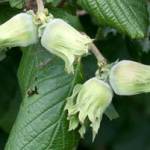
- Red Filbert
-
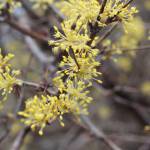
- Cornelian Cherry
-
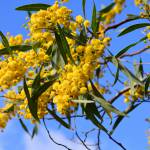
- silver wattle
-
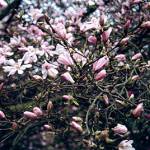
- Leonard Messel Magnolia
-
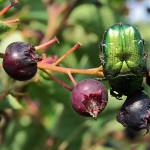
- amelanchier ovalis
References:
https://en.wikipedia.org, https://www.barcham.co.uk, https://www.rhs.org.uk, https://www.forestry.gov.uk