
Ivy is much maligned but is it all bad or does it have some redeeming features?
Ivy is our only native evergreen climber and it has two forms. When the ivy is juvenile it has the characteristic lobed ‘ivy shaped’ leaves that are particularly well adapted to living in low light conditions. When it is mature it produces side branches with elliptical leaves and flowering shoots. This mature form will usually only develop where the light conditions are good.
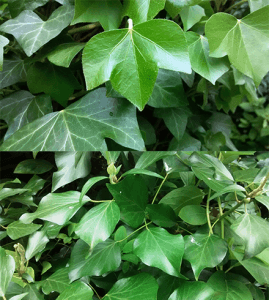
Ivy and Wildlife
Ivy is an essential part of the wildlife habitat, providing food and shelter for a wide range of birds, mammals and insects.
• The flowers provide a late source of pollen for bees, butterflies and caterpillars long into the autumn.
• The berries, which ripen in March / April, have a high-fat content and provide an essential early year source of food for both native and migrant birds including blackcaps, starlings and thrushes.
• Ivy stems provide a safe haven, nesting and roosting places for a variety of birds and bats.
• Ivy as ground cover protects the woodland floor from frost enabling ground foraging birds such as blackbirds, robins and dunnocks to feed through the winter.
Ivy and Tree Health
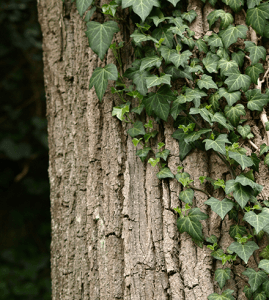
Ivy is not parasitic and does not directly affect the health of the trees. Its supplies itself with water and nutrients and only uses the tree as a means of support to reach the light.
A heavy infestation of ivy throughout the crown of a tree is usually but not always an indication that the tree is in a state of natural decline.
In these circumstances, ivy can smother a tree and hasten its decline. The dense adult growth, throughout the crown, will tend to make the tree top heavy and therefore more likely to fail during adverse weather conditions.
Ivy and Tree Safety
A dense covering of ivy on the trunk and throughout the crown of a mature tree can prevent tree safety inspections by obscuring cavities, the presence of decay fungi and the structure of the tree. However, ivy can (albeit infrequently) form a natural brace between vertical stems and severing such a brace may increase the likelihood of stem failure.
Ivy and Walls
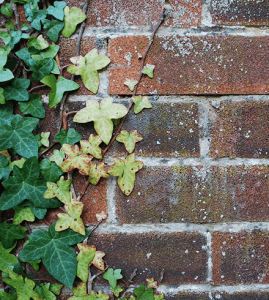
Crumbling mortar and gaps between bricks can be occupied by both the ivy tendrils (aerial roots) and the ivy stems, which exacerbate the existing problem and cause further damage to the wall. Sound walls and mortar will not be affected. Dry stone walls are of course without mortar and naturally have cracks and crevices for ivy to occupy; if you pull off the ivy, you run the risk of pulling out stones or possibly pulling down the wall.
Control
The most effective way of controlling ivy is to cut the individual stems near to the base of the tree or wall. It is advisable to remove a section of each of the stems, to reveal the surface below, in order to be certain that each stem has been cut. The severed stems can be chemically treated to prevent any re-growth if necessary.