British Standard 5837:2012
Trees in relation to Design, Demolition and Construction
- BS: 5837 provides ‘recommendations and guidance for arboriculturists, architects, builders, engineers, landscape architects … and all others interested in harmony between trees and development in its broadest sense’
- BS:5837 is ‘intended to assist decision-making with regard to existing and proposed trees in the context of design, demolition and construction’
- BS:5837 ‘should not be quoted as if it were a specification’
Apprehension
Meaning – dread: a feeling of anxiety or fear that something bad or unpleasant will happen.
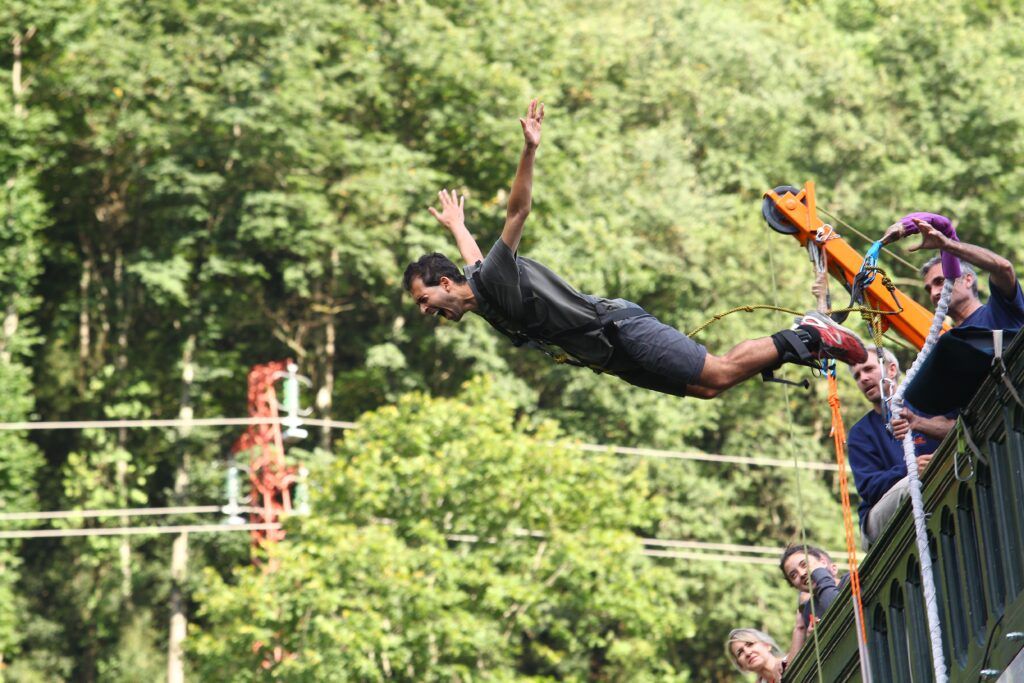
The thought of jumping off the Clifton Suspension Bridge with a length of elastic tied to my ankles fills me with dread, but my kids tell me bungee jumping is an adrenalin rush! Public speaking, according to most surveys, is the nation’s No.1 fear and yet many people do it for a living. Apprehension is subjective. An action or event that causes one person to be apprehensive may provide another person with a thrill or an opportunity, in other words ‘One man’s dream is another man’s nightmare’ or perhaps ‘One man’s heaven is another man’s hell’.
Worry is an example of apprehensive behaviour. Worry is imagining that a future situation or circumstance has the potential to cause you, or someone or something you care about, harm.
Apprehension and Planning
Section 5.3.4 d of BS:5837 states, ‘The relationship of buildings to large trees can cause apprehension to occupiers or users of nearby buildings or spaces, resulting in pressure for the removal of the trees. Buildings and other structures should be sited allowing adequate space for a tree’s natural development, with due consideration given to its predicted height and canopy spread. However, this does not mean that trees should not be retained within any particular distance of a structure’.

Decision Making
Forbes explains, in ‘6 Tips for Making Better Decisions’, that decision making is based upon gut instincts, data, information and knowledge.
- Gut Instincts: This is an experiential and/or emotional filter which sometimes is all a person has to go on when making a decision.
- Data: Raw data is comprised of disparate facts, statistics, or random inputs that in-and-of-themselves hold little value. Making conclusions based on data in its raw form will lead to flawed decisions based on incomplete data sets.
- Information: Information is derived from a collection of processed data where context and meaning have been added to disparate facts enabling a more thorough analysis.
- Knowledge: Knowledge is information that has been refined by analysis such that it has been assimilated, tested and/or validated. Most importantly, knowledge is actionable with a high degree of accuracy because proof of concept exists.

Conclusion
Bungee jumping may or may not make an individual apprehensive, public speaking may or may not make an individual apprehensive, large trees near buildings may or may not make an individual apprehensive. There is simply no way of second guessing if a given situation will or will not make an individual apprehensive, without knowing the individual.
Good decisions are based on actionable knowledge; without knowledge good decisions cannot be made.